
For restaurant supply chains and food service operators in Korea and Japan, the charcoal beneath the grill is not a commodity. It is part of the cuisine. Samgyeopsal restaurants serve charcoal table-side. Yakitori chefs build their reputation on the heat profile of a single piece of binchotan. The product specification matters in a way it simply does not for many other ingredients.
For buyers in these markets searching for a serious Indonesian alternative to Japanese binchotan, Ironwood Charcoal from Indonesia has become the obvious shortlist candidate. This guide covers what Ironwood Charcoal is, the specifications that matter, why it suits both Korean BBQ and Japanese restaurant applications, and how to source it from PT. Salam Niaga Bakti in West Java.
What Is Ironwood Charcoal?
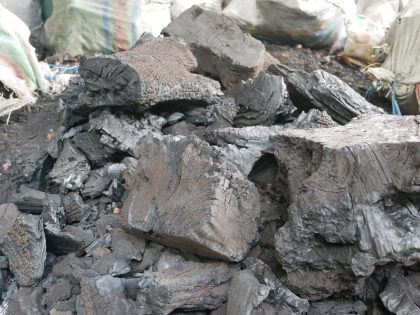
Ironwood Charcoal is produced from Eusideroxylon zwageri locally known as Ulin or Kayu Besi. The species is native to Borneo and parts of Sumatra. As the name suggests, the wood is extraordinarily dense. Historically it was used for shipbuilding, bridge construction, and railway sleepers, because it resists rot, fire, and insects in ways most tropical hardwoods cannot. This density is precisely what makes Ironwood charcoal exceptional for grilling applications. When carbonized properly, the resulting Ironwood Charcoal carries forward three characteristics that the food service industry values
Fixed Carbon is the percentage of pure carbon that actually combusts and produces heat. Anything above 80% places a hardwood charcoal in the premium grade. Standard export-grade hardwood charcoal usually sits between 65% and 72%. Ironwood Charcoal’s ≥82% Fixed Carbon means more carbon mass is doing useful work per kilogram, which translates to higher peak temperature and longer burn duration.
Ash Content at ≤3% is well within the range Korean BBQ and Japanese restaurant operators expect. Lower ash means less residue, easier cleanup, and no bitter aftertaste affecting the food.
Calorific Value at ≥7,800 kcal/kg places Ironwood Charcoal at the upper end of the hardwood charcoal range. This is why a relatively small piece can hold a hot grill for hours.
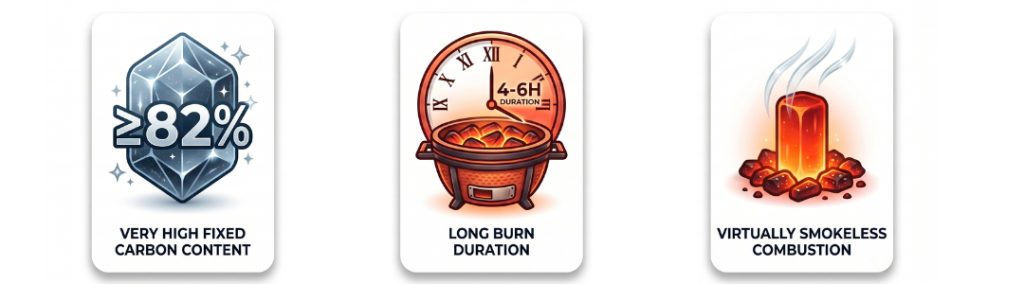
These three properties are exactly what defines a binchotan-class product. Japanese binchotan is produced from Quercus phillyraeoides (holm oak), but the functional output for a chef or grill operator is closely comparable. Indonesian Ironwood charcoal does not need to be sold as a binchotan substitute, because it stands on its own specifications.
PT SNB currently supplies retainer buyers in Oman and Czech Republic with documented track record. We are actively building partnerships with importers, distributors, and restaurant supply chains in South Korea, Japan, China, and Australia and we welcome inquiries from buyers in these markets specifically.
If your restaurant chain, food service distribution operation, or import business is evaluating Indonesian Ironwood Charcoal as a binchotan alternative or premium Korean BBQ charcoal, the practical next step is straightforward: request a sample, evaluate against your current benchmark, and decide on commercial terms based on actual performance.