
Yakitori and yakiniku restaurants across Japan face a common sourcing dilemma. Authentic binchotan from Kishu remains the cultural gold standard, but its cost makes daily commercial operations difficult to sustain. As a result, restaurant distributors and trading companies are actively searching for ironwood charcoal for Japanese restaurants, a premium hardwood alternative that meets the same operational standards at workable economics. According to UN COMTRADE data, Japan imported approximately $17 million in wood charcoal from Indonesia during 2025, with annual import volumes growing 5–7% year over year. Furthermore, total Japanese white charcoal imports range between 10,000 and 12,000 metric tons annually, sourced primarily from Vietnam, Indonesia, and Thailand. This guide explains why ironwood charcoal from Indonesia has become a serious alternative for distributors supplying yakitori, yakiniku, robatayaki, and kappo restaurants and what to evaluate when sourcing it at commercial scale
What Japanese Restaurants Actually Require from Charcoal
When a yakitori chef burns 20 to 40 pounds of charcoal per service, the product is not just fuel — it directly affects food quality and the guest experience. Furthermore, the indoor dining environment in most Japanese restaurants places strict demands on what charcoal can and cannot do. Purchasing managers and trading companies typically evaluate five operational criteria when sourcing hardwood charcoal for Japanese restaurant supply chains.
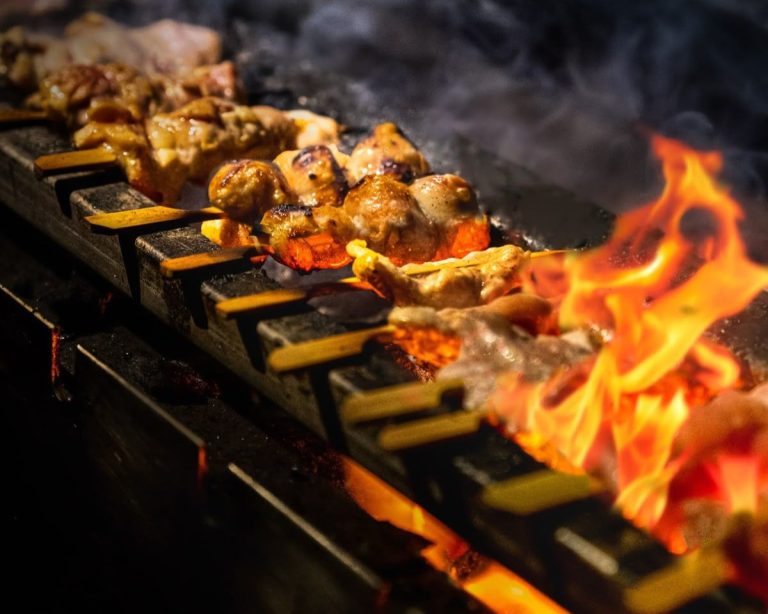
- SMOKELESS
Most Japanese restaurants operate with limited ventilation, and grills sit close to diners. Excessive smoke contaminates the dining environment and triggers customer complaints. Therefore, charcoal with low volatile matter is essential for indoor service. - NEUTRAL AROMA (ODORLESS)
Premium Japanese cuisine relies on subtle flavor profiles. Consequently, charcoal cannot introduce foreign smoke notes or chemical residues from binders and accelerants. Only 100% natural charcoal without additives meets this standard. - CONSISTENT TEMPERATURE OUTPUT
Yakitori chefs grill chicken skewers in under three minutes per side. As a result, they need predictable heat that does not fluctuate during a service shift. Inconsistent charcoal forces constant adjustment and ruins timing across multiple skewers. - LONG BURN TIME
Yakiniku restaurants typically operate 5 to 8 hours per service period. Each charcoal change creates downtime, smoke from re-lighting, and additional labor cost. Therefore, longer burn cycles directly improve operational efficiency. - MINIMAL SPARKLING
In yakiniku and konro grilling, customers sit within arm’s reach of the grill. Sparking creates both safety risk and customer discomfort. Charcoal with low volatile matter and stable structure produces virtually no sparks during normal service.
What Is Ironwood Charcoal?
Ironwood charcoal is produced from *Eusideroxylon zwageri*, locally known as Ulin or Kayu Besi. This tropical hardwood species grows primarily in Kalimantan, where its extreme density made it the historical material of choice for shipbuilding and bridge construction. Moreover, the wood resists rot, fire, and insects in ways that few other tropical hardwoods can match.
The same density that built ships now produces an exceptional grilling charcoal. PT. Salam Niaga Bakti sources Ulin from licensed suppliers in Kalimantan and processes it through controlled carbonization at our facility in West Java. The carbonization stage is critical. Temperature, oxygen control, and duration determine how much fixed carbon remains in the final product. As a result, our finished ironwood charcoal carries a consistent quality profile from one batch to the next.
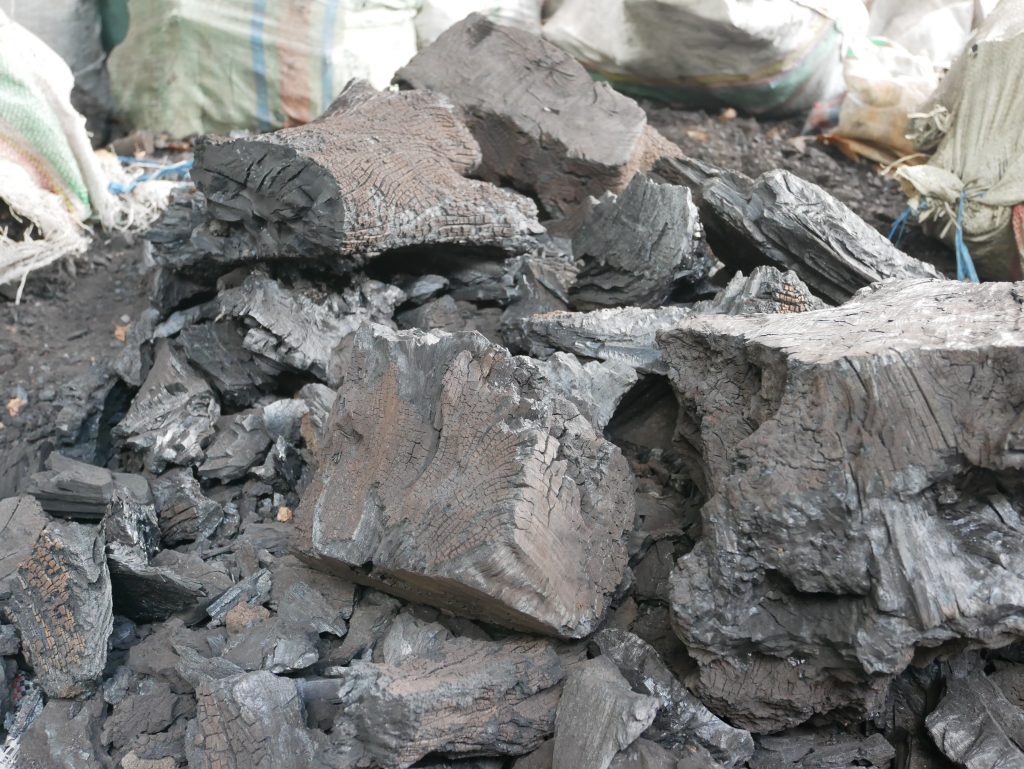
Physically, ironwood charcoal has a dark, dense appearance with a metallic ring when pieces are struck together. The lump size for export grade ranges between 5 and 20 centimeters. Additionally, the product weighs noticeably more per piece than standard mixed hardwood charcoal, a direct consequence of the wood’s density. This density is also what produces the operational performance that Japanese restaurants require. The next section covers the technical specifications in detail.
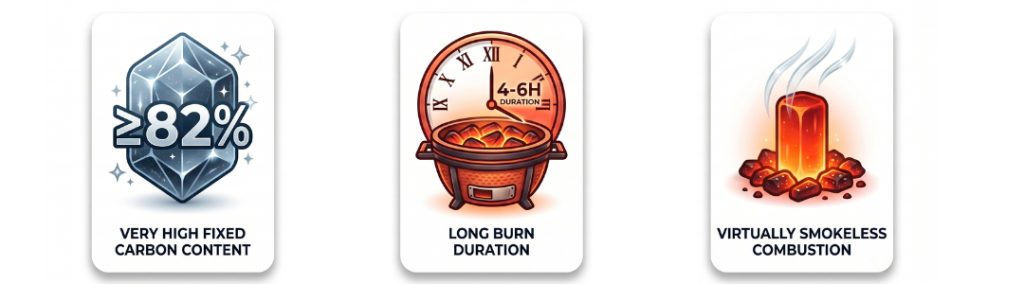
All specifications are verified by independent laboratory testing (CARSURIN). Certificate of Analysis (CoA) available upon request.
How Ironwood Charcoal Performs in a Japanese Restaurant Kitchen
The numbers in the specification table translate to specific operational outcomes in a working restaurant kitchen. Three performance characteristics matter most for yakitori and yakiniku operators.
Smokeless Performance for Indoor Dining
Fixed carbon content is the single most important specification for smoke output. Charcoal with higher fixed carbon contains lower volatile matter, which means less smoke develops during combustion. Furthermore, in a typical yakiniku restaurant, diners sit between 30 and 50 centimeters from the grill. Smoke directly affects their dining experience, their clothing, and the restaurant’s online reviews. Ironwood charcoal at 82% fixed carbon burns close to smoke-free once fully ignited. As a result, restaurants can run grills in normal dining areas without compromising guest comfort.
Consistent Heat for Precision Grilling
Yakitori and yakiniku grilling demand temperature stability. A chef cannot adjust the heat every 30 seconds across multiple skewers or cuts of meat. Therefore, the charcoal must produce a stable, predictable heat output throughout a service. The density of ironwood charcoal means it burns at a consistent intensity, similar to infrared radiation, without sudden flare-ups or cold spots. Consequently, chefs can dial in cooking times and rely on the heat profile from shift to shift.

Long Burn Time for Extended Service Hours
Yakiniku restaurants typically operate from lunch service through late dinner often 5 to 8 hours of continuous grilling. Every charcoal change creates problems: downtime at the grill, smoke during re-lighting, and labor cost. Ironwood charcoal burns for 4 to 6 hours per charge under standard restaurant grill conditions. As a result, an evening service often requires only one or two charcoal changes, compared to four or more with lower-grade hardwood. This directly reduces operational cost and improves service throughput.
Ironwood Charcoal vs. Binchotan
Binchotan from Kishu in Wakayama Prefecture remains the gold standard for Japanese charcoal grilling. Indonesian ironwood charcoal does not replicate binchotan. However, it does meet the same operational standards at a fundamentally different cost structure. Below is an honest side-by-side comparison.
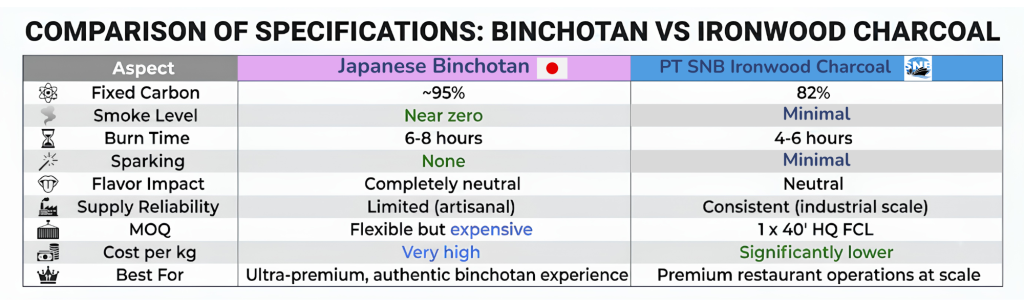
Binchotan Kishu is a cultural product with more than 300 years of artisanal tradition behind it. The Kishu producers refine their craft generation by generation, and the resulting charcoal carries cultural weight that no other product can replicate. Therefore, restaurants positioning around authentic Japanese culinary tradition will continue to use binchotan as the centerpiece of their operation.
Daily commercial operations, however, require something different. For a restaurant chain, trading company, or distributor supplying more than 10 outlets, ironwood charcoal delivers what binchotan cannot always guarantee at scale: consistent supply, predictable operational cost, and reliable delivery windows. Furthermore, the operational performance — clean burn, stable heat, long-lasting service — meets the same kitchen demands. In short, ironwood charcoal is the practical answer for restaurant supply chains that need binchotan-class performance at sustainable wholesale economics. For a deeper product breakdown, see our Ironwood Charcoal product