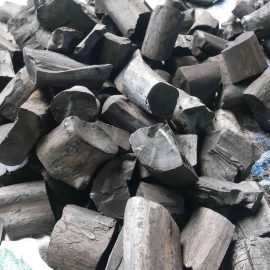
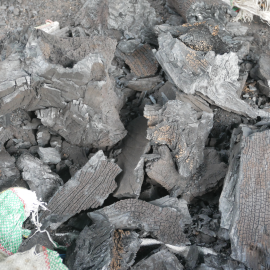
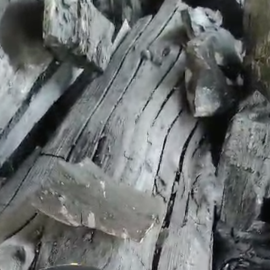
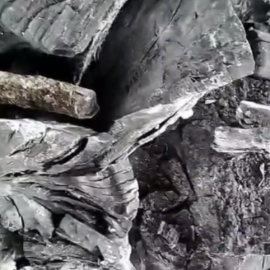
If you are sourcing hardwood charcoal from Indonesia in 2026, you have probably seen the price range vary dramatically between suppliers, sometimes by more than 60% per metric ton for what appears to be the same product. This is not a sign of an inefficient market. It is a sign that hardwood charcoal is not a single commodity. The hardwood charcoal wholesale price depends on five distinct variables, and understanding each one is the difference between sourcing a container that delivers what your customers expect and sourcing one that does not.
This guide breaks down the factors that drive hardwood charcoal pricing, references PT. Salam Niaga Bakti’s current 2026 FOB price range, and explains the red flags to watch out for when a supplier offers a price that looks too good to be true.
Five Factors That Affect Hardwood Charcoal Wholesale Price
1. Wood Species
The single biggest driver of price is the wood species used to produce the charcoal. Different hardwoods carbonize differently and serve different end-uses, so the wholesale price reflects both production cost and market demand.
Halaban Charcoal
Very low ash, ideal for Korean BBQ and yakiniku
Ironwood Charcoal
Ultra-dense, near-binchotan grade for yakitori
Arabika (Black Clamps) Charcoal
Very low ash, ideal for Korean BBQ and yakiniku
Tamarind Charcoal
Fast ignition, for outdoor BBQ and the Australian market
Each species has a different production cost, different yield per ton of raw wood, and different demand profile. As a result, the FOB price varies significantly across SKUs even from the same supplier.
2. Fixed Carbon Content & Quality Grade
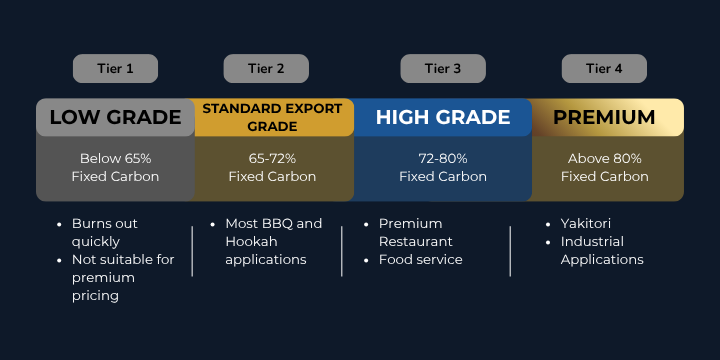
Fixed Carbon is the percentage of pure carbon that combusts and produces heat. It is the single most important quality metric for hardwood charcoal, and it directly affects price.
As a practical benchmark:
Higher Fixed Carbon requires denser source wood and tighter carbonization control, both of which raise production cost. Therefore, a supplier offering 82% Fixed Carbon at the same price as 65% material is either misrepresenting the spec or cutting corners elsewhere.
3. Certification Costs
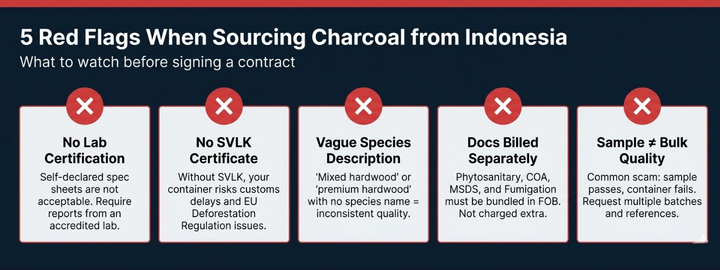
Lab testing, SVLK timber legality verification, Phytosanitary Certificates, Fumigation Certificates, and MSDS documentation all cost money to produce. Serious exporters bundle these into the FOB price, less rigorous suppliers strip them out to advertise a lower headline price.
PT SNB’s lab testing is conducted by PT. CARSURIN Tbk, an independent KAN-accredited laboratory operating under ISO 17025:2017. Every Halaban and Arabika shipment carries a verifiable CARSURIN Certificate of Analysis.
4. Container Type and Logistics
Hardwood charcoal from Indonesia ships in 40′ High Cube Full Container Load (not 20′ FCL). The volume-to-weight ratio favors the high cube, so attempting to ship in a 20′ container is operationally inefficient.
5. Market Demand by Region
Regional demand affects pricing too. Korean BBQ demand pushes Halaban prices up. Japanese yakitori demand keeps Ironwood priced competitively against binchotan. Middle East demand stabilizes Arabika pricing year-round. Australian retail-charcoal demand drives Tamarind. Suppliers with established buyer relationships in high-demand markets can sustain firmer pricing; suppliers desperate to move inventory will discount aggressively, often by cutting documentation or quality.
Red Flags from Cheap Suppliers
When evaluating offers significantly below the reference range above, look for these warning signs:
Conclusion
Hardwood charcoal wholesale price in 2026 is not driven by a single factor. Wood species, Fixed Carbon, certification, container logistics, and regional demand all combine to determine what your container actually costs (what it actually delivers). The buyers who source successfully are the ones who understand these variables and select suppliers whose pricing reflects verifiable quality rather than the lowest headline number.
PT. Salam Niaga Bakti typically respond within one business day with a formal pro forma quotation, the most recent CARSURIN Certificate of Analysis, and a transparent breakdown of FOB charges. For buyers evaluating PT SNB for the first time, we recommend starting with a sample shipment via DHL or FedEx before any commercial commitment. For samples or formal quotation, visit our Contact page or email sales@ptsnb.co.id directly.